

Last Updated on December 29, 2025
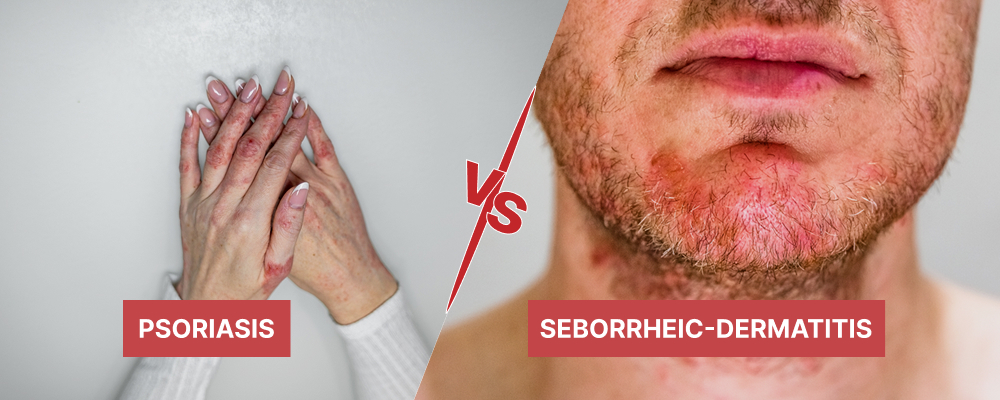
- Seborrheic dermatitis vs psoriasis is a common comparison because both conditions can look similar, especially on the scalp and face.
- Seborrheic dermatitis is linked to oil and yeast on the skin, while psoriasis is an autoimmune condition.
- The texture of scales matters: greasy and soft flakes suggest seborrheic dermatitis, while thick and dry plaques suggest psoriasis.
- Correct diagnosis is important because each condition needs a different treatment approach.
- Both conditions are long-lasting but can be managed effectively with proper care and medical guidance.
Seborrheic dermatitis and psoriasis are two common skin conditions that often look alike, particularly on the scalp and face. Because of their similarities, many people confuse one for the other and end up using the wrong treatments. That is where the comparison of Seborrheic dermatitis vs psoriasis becomes important.
Here’s the thing: both conditions are common, long-lasting, and often misunderstood. Moreover, they can affect confidence and daily comfort. In this blog, we will clearly explain how they differ, what causes them, and how they are treated.
By the end, you will get a clearer picture of what you might be dealing with and what steps to take next.
Understanding Seborrheic Dermatitis
Seborrheic dermatitis is a long-lasting but manageable skin condition that mainly affects areas where the skin produces more oil. The scalp is the most common area, but it can also appear around the nose, eyebrows, ears, and chest.
This condition often causes greasy flakes, redness, itching, and may lead to hair loss as well. Many people experience flare-ups during the winter months or stressful periods. While it may look concerning, seborrheic dermatitis is not contagious and is usually mild to moderate in severity.
Understanding Psoriasis
Psoriasis is a chronic autoimmune condition, meaning the immune system mistakenly attacks healthy skin cells. This causes skin cells to grow much faster than normal, leading to thick, raised patches covered with silvery scales.
Psoriasis can appear anywhere on the body and may also affect the nails or joints. Some people even develop symptoms on sensitive areas like the hairline or cheeks, a situation often referred to as facial psoriasis, which requires extra care due to skin sensitivity.
Why Are These Two Skin Conditions Often Confused?
Before diving deeper, it helps to know why confusion happens in the first place. Both conditions can appear red, flaky, and itchy. Therefore, many people assume they are the same problem.
However, the truth is simpler than it seems. Seborrheic dermatitis is more linked to oil production and yeast on the skin. Psoriasis, on the other hand, is an immune system issue. Because they can appear on similar areas like the scalp or face, mix-ups are very common.
Symptoms of Seborrheic Dermatitis and Psoriasis
To begin with, symptoms give the first clues. Although overlap exists, there are clear signs if you look closely.
Seborrheic dermatitis often shows up as greasy flakes and mild redness. In contrast, psoriasis tends to cause thicker, well-defined plaques. Moreover, itching levels can vary between the two.
Common signs include
- Yellow or white flakes on the scalp or eyebrows
- Red patches around the nose, ears, or chest
- Thick, silvery scales with clear borders
- Dry skin that may crack or bleed
While both can itch, psoriasis plaques usually feel more raised and sore. Therefore, noticing texture and scale thickness really helps.
Causes Of Seborrheic Dermatitis and Psoriasis
Although they look similar, the causes of seborrheic dermatitis and psoriasis are very different.
Seborrheic dermatitis is linked to an overgrowth of yeast that naturally lives on the skin, combined with excess oil production and skin sensitivity. Environmental factors like cold weather and stress can make symptoms worse.
Psoriasis, however, develops due to immune system dysfunction and genetic factors. Triggers such as infections, injuries to the skin, or emotional stress can lead to flare-ups.
Who Is More Likely to Develop These Conditions?
Certain people are more prone to these skin issues. The risk factors for seborrheic dermatitis and psoriasis vary based on the condition.
Seborrheic dermatitis is more common in people with oily skin, neurological conditions, weakened immune systems, or high stress levels.
On the other hand, psoriasis is more likely to occur if you have a family history of the disease. Additionally, smoking, obesity, infections, and some medications may also increase the risk or worsen symptoms.
How Do Doctors Diagnose Seborrheic Dermatitis and Psoriasis?
Diagnosis usually starts with a visual exam. Still, doctors look closely at scale type, borders, and affected areas.
Sometimes, a small skin sample is taken to rule out other issues (skin biopsy). Moreover, your personal and family history matters a lot. A correct diagnosis ensures the right treatment plan, which saves time and frustration.
Treatment Options for Seborrheic Dermatitis and Psoriasis
The treatment approach for seborrheic dermatitis and psoriasis depends on severity, location, and how often symptoms return. It may include both medical and lifestyle strategies. For example;
Seborrheic dermatitis is commonly managed with medicated shampoos, antifungal treatments, and gentle topical creams. Regular scalp care and stress management also play an important role.
Psoriasis treatment may involve topical medications, light therapy, or systemic treatments for more severe cases. Because psoriasis is chronic, long-term management is often necessary.
Exploring New Treatment Options Through Research
Beyond standard care, research plays a big role in improving treatment. For individuals who do not respond well to standard therapies, research studies can provide access to newer options.
Dermatology clinical trials focus on developing safer and more effective treatments for chronic skin conditions such as psoriasis and seborrheic dermatitis.
Moreover, some research centers, such as MBCP, offer clinical trials in Boston, focused on innovative treatments for inflammatory skin diseases. Participation can offer access to new options while supporting medical progress.
Key Differences: Seborrheic Dermatitis vs Psoriasis
| Feature | Seborrheic Dermatitis | Psoriasis |
|---|---|---|
| Type of condition | Inflammatory skin condition related to oil and yeast on the skin | Chronic autoimmune disease involving the immune system |
| Main cause | Overgrowth of natural yeast combined with excess oil and skin sensitivity | The immune system attacks healthy skin cells, speeding up skin cell growth |
| Common areas affected | Scalp, eyebrows, sides of nose, ears, chest | Scalp, elbows, knees, lower back, face, nails, and sometimes joints |
| Appearance of skin | Greasy, yellow, or white flakes with redness | Thick, red patches covered with silvery-white scales |
| Texture of scales | Soft, oily, and loosely attached | Thick, dry, and firmly attached plaques |
| Itching level | Mild to moderate itching | Moderate to severe itching, burning, or soreness |
| Skin damage | Rarely cracks or bleeds | Skin may crack, bleed, or feel painful |
| Severity | Usually mild to moderate and manageable | Can range from mild to severe and long-lasting |
| Triggers | Stress, cold weather, oily skin, weakened immunity | Stress, infections, skin injury, smoking, and certain medications |
| Treatment approach | Medicated shampoos, antifungal creams, and gentle topical treatments | Topical therapy, light therapy, systemic or biologic medications |
| Long-term management | Symptoms often come and go | Requires ongoing, long-term management |
Final Thoughts
Understanding seborrheic dermatitis vs psoriasis helps you take the right steps for your skin. Even though both conditions may look alike, treating them differently is key to real improvement. If symptoms keep returning, a dermatologist can pinpoint the cause and guide effective care.
Remember, with the right care and consistency, both conditions can be managed effectively, helping you stay comfortable and confident in your skin.
Frequently Asked Questions (FAQs)
How can I tell if I have seborrheic dermatitis or psoriasis?
Seborrheic dermatitis usually causes greasy, yellow or white flakes with mild redness, mostly on oily areas like the scalp and face. Psoriasis often causes thicker, dry, red patches with silvery scales and clear borders. A dermatologist can confirm the diagnosis through a skin exam.
Can seborrheic dermatitis turn into psoriasis?
No, seborrheic dermatitis and psoriasis are different conditions with different causes. One does not turn into the other, but they can sometimes appear in the same areas, which makes them easy to confuse.
Are seborrheic dermatitis and psoriasis contagious?
No, neither seborrheic dermatitis nor psoriasis is contagious. You cannot catch them from another person through touch or close contact.
When should I see a doctor for flaky or itchy skin?
You should see a doctor if symptoms keep coming back, worsen over time, cause pain or bleeding, or do not improve with over-the-counter treatments. Early diagnosis helps ensure the right treatment plan.
Need support for your clinical trials?
Your journey to better care starts here, reach out to us today!

 617-789-5300