

Key Takeaways
- Hypopigmentation occurs when areas of skin have less pigment than the surrounding skin.
- Causes include inflammation, injuries, infections, scarring, certain procedures, medications, and conditions such as vitiligo.
- Post-inflammatory hypopigmentation can occur after skin inflammation or injury and may improve as the skin heals.
- It is different from vitiligo, although vitiligo can cause areas of pigment loss.
- Hypopigmentation treatment depends on the underlying cause.
- Some cases resolve naturally, while others may be persistent or permanent.
- A dermatologist can help distinguish hypopigmentation from vitiligo and other causes of light-colored skin.
What Is Hypopigmentation?
Hypopigmentation refers to areas of skin that appear lighter than a person’s usual skin tone because of reduced melanin production or distribution. Melanin is the pigment responsible for much of the color of the skin, hair, and eyes. When the skin produces less melanin, lighter patches or spots can develop.
Hypopigmentation can affect a small area or cover larger portions of the body. Its appearance can range from slightly lighter patches to areas that are nearly white. The texture of the skin may remain normal, although some underlying conditions can also cause dryness, scaling, itching, or inflammation.
Because many different conditions can cause changes in skin color, identifying the underlying cause is important before choosing a treatment.
What Causes Hypopigmentation?
Understanding what causes hypopigmentation can help determine whether the color difference is temporary or may require ongoing management.
Common causes include:
- Skin injuries: Burns, blisters, infections, and other forms of skin damage can interfere with pigment production.
- Inflammatory skin conditions: Eczema, psoriasis, and other inflammatory conditions may leave lighter areas after inflammation improves.
- Fungal infections: Conditions such as tinea versicolor can cause lighter or darker patches on the skin.
- Vitiligo: This condition causes loss of skin color when the immune system attacks melanocytes, the cells responsible for producing pigment.
- Skin procedures: Laser treatments, dermabrasion, and chemical peels can sometimes result in hypopigmentation.
- Scarring: Skin that has been scarred may remain lighter than the surrounding area.
- Certain medications or chemicals: Some exposures can interfere with pigmentation.
- Genetic conditions: Rare conditions such as albinism can cause generalized reduction in pigmentation.
A dermatologist can examine the affected skin and determine whether additional testing is needed.
What Is Post-Inflammatory Hypopigmentation?
Post-inflammatory hypopigmentation occurs when an area of skin becomes lighter after inflammation or injury. It can appear following conditions such as eczema, dermatitis, infections, burns, or other forms of skin irritation.
The inflammation can temporarily interfere with normal pigment production. Depending on the severity and cause of the skin injury, pigmentation may gradually return as the skin recovers. Some cases, particularly those involving significant skin damage or scarring, can persist.
This is one reason a lighter patch that develops after a rash or injury should not automatically be assumed to be vitiligo.
Hypopigmentation vs Vitiligo: What Is the Difference?
When comparing hypopigmentation vs vitiligo, it is important to understand that hypopigmentation describes a change in skin pigmentation, while vitiligo is a specific condition that causes loss of skin color.
Hypopigmentation can have many causes, including inflammation, infection, injury, scarring, and certain treatments. Vitiligo occurs when the body’s immune system attacks melanocytes, resulting in areas where skin loses its color.
Vitiligo patches may appear lighter than the surrounding skin and can eventually become completely white. They can occur on many areas of the body, including the face, hands, arms, feet, and around body openings. Hair in affected areas may also lose its color.
A dermatologist may use a Wood’s lamp examination along with a physical examination and medical history to help distinguish vitiligo from other causes of light-colored skin patches.
For more information, see our guide on Is Vitiligo Hereditary.
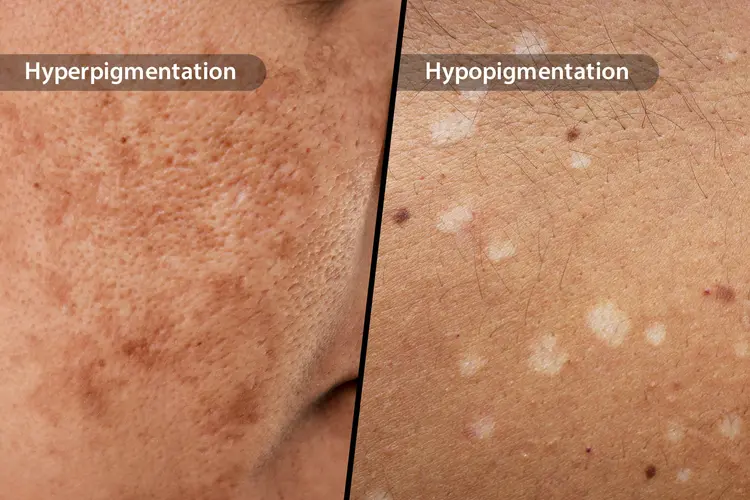
Hyperpigmentation vs Hypopigmentation
Visual:
Want to Be Part of Advancing Vitiligo Treatment?
Join our clinical trial and contribute to groundbreaking research on vitiligo.
Hyperpigmentation causes areas of skin to become darker than the surrounding skin because of increased melanin or other pigment changes.
Hypopigmentation, on the other hand, causes areas to become lighter because there is less melanin.
Both can occur after inflammation, injury, certain skin conditions, or treatments. The underlying cause determines how the discoloration should be managed.
It is also important not to confuse hypopigmentation with white sunspots on skin. Light or white spots can have several causes, and their appearance alone may not be enough to identify the condition.
How Is Hypopigmentation Diagnosed?
Diagnosis usually begins with an examination of the skin. A healthcare professional may ask when the patches appeared, whether they developed after a rash or injury, whether they are changing, and whether there are symptoms such as itching or scaling.
A dermatologist may also consider:
- The location and distribution of the patches
- Whether the affected skin is completely white or only lighter
- Changes in texture
- Previous skin inflammation or injury
- Medications or cosmetic procedures
- Family and personal medical history
- Whether similar patches are appearing elsewhere
When vitiligo is suspected, a Wood’s lamp may help make areas of pigment loss easier to identify. Additional tests may be recommended depending on the findings.
Hypopigmentation Treatment Options
The appropriate hypopigmentation treatment depends on the cause, severity, location, and whether the pigment loss is temporary or permanent.
Treating the Underlying Condition
If hypopigmentation results from eczema, psoriasis, an infection, or another skin condition, treating that underlying problem may allow the skin to gradually regain its normal color. In some inflammatory conditions and infections, pigmentation can return over weeks or months after the underlying condition improves.
Treatment for Vitiligo
If the cause is vitiligo, dermatologists may recommend treatments designed to restore lost pigment or limit further pigment loss. Depending on the individual situation, treatment may include prescription topical medications, phototherapy, or other approaches. Treatment response varies between individuals and body areas.
Cosmetic Camouflage
When pigment does not return completely, camouflage makeup, self-tanning products, or skin dyes may make lighter areas less noticeable. These options do not treat the underlying cause but can help reduce the visible contrast between affected and unaffected skin.
Sun Protection
Lighter areas of skin can be more vulnerable to sunburn. Using broad-spectrum sunscreen and protecting affected areas from excessive sun exposure can help reduce sun-related damage and make color differences less noticeable.
Because some cosmetic and dermatologic treatments can themselves affect pigmentation, it is best to discuss treatment options with a qualified healthcare professional before trying procedures or strong topical products.
How to Get Rid of Hypopigmentation
If you are wondering how to get rid of hypopigmentation, there is no single treatment that works for every case.
Some forms improve naturally as the skin heals, while others require treatment of an underlying condition. Hypopigmentation caused by scarring or certain genetic conditions may be permanent.
Avoiding unnecessary skin irritation and protecting lighter areas from the sun may also help protect the affected skin while it is being evaluated or treated.
If a light patch is new, spreading, persistent, or accompanied by other skin changes, a dermatologist can help determine the cause rather than relying on appearance alone.
Is Vitiligo Hereditary?
Genetics can play a role in a person’s likelihood of developing vitiligo, but having a family member with the condition does not mean someone will necessarily develop it.
Vitiligo is an autoimmune condition in which the immune system attacks melanocytes. Researchers continue to study the genetic and environmental factors involved in its development.
If you are experiencing unexplained white or lighter patches, a healthcare professional can help determine whether they are related to vitiligo or another pigmentation disorder.
Can Clinical Research Help with Pigmentation Disorders?
Clinical research helps researchers evaluate potential approaches for conditions that affect the skin and pigmentation. People interested in research opportunities may explore Vitiligo Clinical Trials to learn about studies investigating potential treatments and interventions.
Broader Dermatology Clinical Trials may also include research involving different skin conditions and treatment approaches.
Eligibility for a clinical study depends on factors such as the condition being studied, age, medical history, previous treatments, and study-specific requirements. Participation is voluntary, and a research team can explain the potential benefits, risks, and requirements before enrolment.
When Should You See a Dermatologist?
Not every light patch indicates a serious condition. However, professional evaluation can be useful when pigmentation changes are unexplained or persistent.
Consider speaking with a dermatologist if:
- New light or white patches continue appearing.
- Existing patches are spreading or changing.
- The skin becomes itchy, scaly, painful, or inflamed.
- Pigment loss follows a procedure or significant injury.
- You suspect vitiligo or another pigmentation disorder.
- You are unsure whether a patch is hypopigmentation, vitiligo, or another condition.
Early evaluation can help identify the underlying cause and determine whether treatment is appropriate.
Final Thoughts
Hypopigmentation can develop for many different reasons, from temporary inflammation and skin injuries to chronic pigmentation disorders. While some cases gradually improve without treatment, others may require medical management. Understanding the underlying cause is the first step toward choosing an appropriate approach.
If you notice new or changing areas of lighter skin, consider speaking with a dermatologist for an accurate evaluation. For individuals interested in research, clinical studies may also provide opportunities to learn about emerging approaches to pigmentation disorders.
Need support for your clinical trials?
Your journey to better care starts here, reach out to us today!
Frequently Asked Questions
What is hypopigmentation?
It is a reduction in skin pigmentation that causes an area of skin to appear lighter than the surrounding skin. It can have several causes, including inflammation, infection, injury, scarring, and vitiligo.
Can hypopigmentation go away on its own?
Some types can improve as the skin heals. It associated with certain inflammatory conditions, infections, injuries, or treatments may gradually resolve over weeks or months. Other forms may be long-lasting or permanent.
Is hypopigmentation the same as vitiligo?
It is a general term describing reduced skin pigmentation, while vitiligo is a specific autoimmune condition that causes loss of skin color.
What causes hypopigmentation after inflammation?
Inflammation or injury can temporarily interfere with normal pigment production. Conditions such as eczema, dermatitis, infections, and burns can sometimes leave lighter areas after the initial problem improves.
Should I see a dermatologist for white skin patches?
If white or lighter patches are new, spreading, persistent, or unexplained, a dermatologist can help identify the cause. Conditions such as vitiligo, fungal infections, post-inflammatory changes, and other pigmentation disorders can have overlapping appearances.

 617-789-5300