

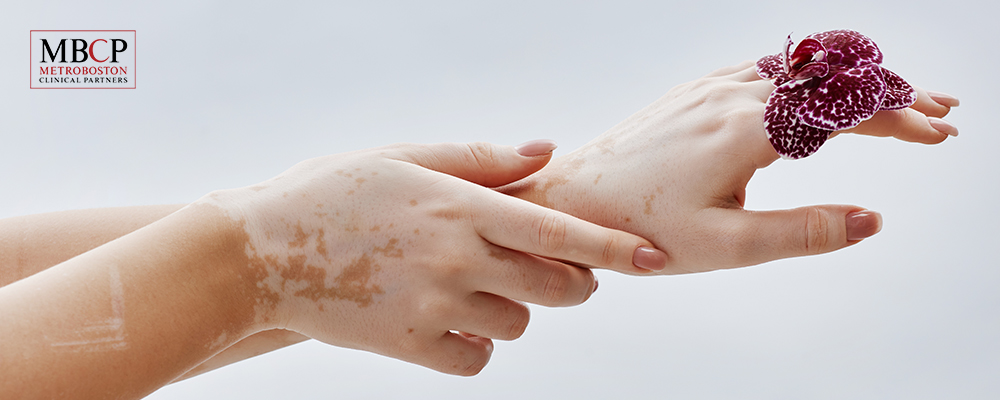
Key Takeaways
- Sun spots result from long-term UV damage to melanin cells.
- Unlike spreading vitiligo, sun spots remain small and stationary.
- Dermatology treatments like retinoids help even out skin tone.
- Daily broad-spectrum SPF 30+ prevents new white spots from forming.
AI Overview
White spots on sun-exposed skin are usually harmless; they are sun-related pigment changes called idiopathic guttate hypomelanosis. Distinct from spreading vitiligo, they can be managed with professional dermatological treatments and prevented using daily broad-spectrum SPF 30+.
If this sounds familiar, you’re not alone. A lot of people notice these pale patches after years in the sun and assume the worst. The good news is that there’s usually a clear explanation, and often, a clear path forward too.
This blog covers what causes these spots, how they differ from other conditions, what helps, and how to get rid of white spots on skin from sun exposure using real dermatological methods.
What Causes White Spots on Skin After Sun Exposure?
Here’s the thing about skin: it’s constantly responding to what happens to it. Years of sun exposure can wear down the cells responsible for producing melanin, the pigment that gives your skin its color. When those cells slow down in specific spots, you end up with patches that look noticeably lighter than the surrounding skin.
Breaking Down the Medical Term:
This condition is often called idiopathic guttate hypomelanosis. “Idiopathic” means the exact cause isn’t fully understood. “Guttate” means the spots are small and drop-shaped. “Hypomelanosis” just means reduced pigment. Together, it describes small, pale spots that show up on sun-exposed areas like arms, shins, and shoulders, usually after middle age.
Idiopathic guttate hypomelanosis becomes increasingly common with age, affecting roughly 50-80% of adults over 40 and more than 90% of people in their 80s.
These spots aren’t harmful. They don’t hurt, itch, or spread the way some skin conditions do. But they can still catch you off guard, especially if you’re not sure what’s causing them.
Is It Vitiligo or Something Else? How Can You Tell the Difference?
This is probably the question most people are actually asking. White spots on skin from sun exposure can look similar to vitiligo at first glance, and that similarity causes a fair amount of worry. So how do you tell them apart?
Vitiligo happens when the immune system mistakenly attacks pigment-producing cells, called melanocytes. Unlike sun-related spots, vitiligo patches tend to be larger, can appear anywhere on the body regardless of sun exposure, and often spread over time.
There’s also a genetic piece to consider. Many people ask, “Is vitiligo hereditary?” and the honest answer is that it can run in families, though having a relative with vitiligo doesn’t guarantee you’ll develop it too.
Here’s a quick side-by-side to help you spot the difference:
If your spots match the vitiligo column more closely, that’s a good sign it’s time to get a professional opinion rather than guessing at home.
Discover New Possibilities for Eczema Care
Be part of an eczema clinical trial and help uncover better solutions for eczema.
How to Get Rid of White Spots on Skin from Sun: What Actually Works
Once you know what you’re dealing with, the next question is naturally what to do about it. There isn’t a single fix that works for everyone, and honestly, some of these spots are stubborn.
But there are approaches that have shown real results for a lot of people trying to figure out how to get rid of white spots on skin from sun damage.
A few options worth knowing about:
Topical Retinoids:
These can help stimulate skin cell turnover, which sometimes evens out pigment over time.
Corticosteroid Creams:
Prescribed in certain cases to reduce inflammation that may be contributing to pigment changes.
Phototherapy:
Controlled light treatment, done under medical supervision, that can help restore pigment in some cases.
Chemical Peels or Microdermabrasion:
These encourage new skin growth, which can sometimes blend the appearance of lighter patches.
Cosmetic Camouflage:
Not a treatment exactly, but tinted creams or self-tanners can even out skin tone visually while you pursue other options.
None of these are overnight fixes. Skin takes time to respond, and results vary from person to person. That said, working with a dermatologist gives you a much clearer picture of what’s realistic for your specific case, rather than relying on trial and error.
Home Remedies and Prevention: Do They Really Help?
You’ve probably seen home remedies floating around: lemon juice, coconut oil, various oils promising to “restore” pigment. It’s worth being honest here.
Most of these don’t have strong evidence behind them, and some can actually irritate the skin further, especially if applied before sun exposure.
What does help, consistently, is prevention. Here’s what tends to make the biggest difference:
- Apply broad-spectrum sunscreen with SPF 30 or higher, every day, not just on beach trips.
- Reapply sunscreen every two hours if you’re outdoors for extended periods.
- Wear protective clothing, wide-brim hats, and sunglasses during peak sun hours.
- Avoid direct sun exposure between 10 a.m. and 4 p.m. when UV rays are strongest.
- Moisturize regularly, since healthy, well-hydrated skin tends to respond better to any treatment you pursue later.
Prevention won’t undo spots that already exist, but it keeps new ones from forming and supports whatever treatment path you choose.
When Should You See a Dermatologist?
There’s a point where self-care isn’t enough, and it helps to recognize it early rather than waiting. Consider booking an appointment if:
- The spots are spreading or increasing in number.
- New patches appear in areas with little to no sun exposure.
- You notice patches on both sides of your body in a symmetrical pattern.
- The affected skin feels different in texture, not just color.
- You have a family history of autoimmune or pigment-related conditions.
A dermatologist can run tests, sometimes involving a Wood’s lamp examination or a small skin biopsy, to figure out exactly what’s happening. This is also where dermatology clinical research studies come into play, since ongoing research continues to shape how these conditions are diagnosed and treated.
Here’s a simple table to help you decide your next step based on what you’re noticing:
How MetroBoston Clinical Partners Can Help?
We noticed something while working alongside patients dealing with pigment changes. Most people don’t need more information thrown at them; they need help making sense of what they’re already seeing.
Dermatology care grounded in real clinical research, not one-size-fits-all advice, is what guides our approach at MetroBoston Clinical Partners. Whether you’re dealing with vitiligo or just trying to understand what your white spots mean, our team works with you to figure out what’s going on and what to do next.
We also run vitiligo clinical trials near you, giving patients access to newer treatment approaches that aren’t widely available yet. For families managing this with children, we offer pediatric vitiligo clinical trials in Boston, built specifically around the needs of younger patients and their parents.
Our clinical research in Boston continues to grow, and it exists for a simple reason: better research leads to better options for patients.
Conclusion
White spots from sun exposure are common, usually harmless, and often manageable once you understand what’s causing them. But they can also be an early sign of something like vitiligo, which is why paying attention to how the spots look, spread, and behave over time matters more than trying to self-diagnose from a single glance in the mirror.
If any of this sounds like what you’re experiencing, don’t wait for the spots to answer the question for you. Reach out to a dermatology team who can look closely, explain what’s happening, and walk you through real options built around your skin, not a generic checklist.
Need support for your clinical trials?
Your journey to better care starts here, reach out to us today!
Frequently Asked Questions
What causes small white spots on skin after sun exposure?
Repeated sun exposure damages melanin-producing cells over time, leading to small, harmless light spots known as idiopathic guttate hypomelanosis.
How can I tell if my white spots are from the sun or vitiligo?
Sun spots remain small and stationary on exposed areas, while vitiligo causes larger, spreading patches anywhere on the body.
How do you get rid of white spots on skin from sun damage?
Dermatologists treat sun spots using topical retinoids, corticosteroid creams, phototherapy, microdermabrasion, or cosmetic camouflage to even skin tone.
Can home remedies fade sun-related white spots on skin?
No strong evidence supports home remedies; instead, prevent new spots by applying daily broad-spectrum SPF 30+ sunscreen consistently.
When should I see a dermatologist for white spots on skin?
Schedule an appointment if spots spread quickly, appear symmetrically, affect non-exposed areas, change skin texture, or raise diagnostic uncertainty.

 617-789-5300